I take a Sunday morning walk to Venture Coffee to pick up savory pastries for the family. Roughly 5,000 steps round trip. I cross 15th Ave NW and enter Ballard proper, closer to the historic mercantile and maritime districts shaped by its Nordic past. Traces remain: two-story brick walk-ups, an unpredictable street grid that seems to map power and influence more than sound city planning, and small homes once occupied by timber and fishing workers. Engraved names on buildings evoke another era: Kress, Masonic Lodge, Carnegie Free Public Library.
Philanthropist Andrew Carnegie provided grants to build public libraries across the country. In Ballard, a $15,000 Carnegie grant helped cover construction costs. Today, the building is an Aussie sports bar called Kangaroo & Kiwi.
The new library is around the corner, a modern structure of metal and wood, with the city customer service center next door. Pigeons nest in the rafters and shit on the sidewalk. During COVID, the covered entrance became an encampment. Across the street, Ballard Commons became a modern-day Hooverville.
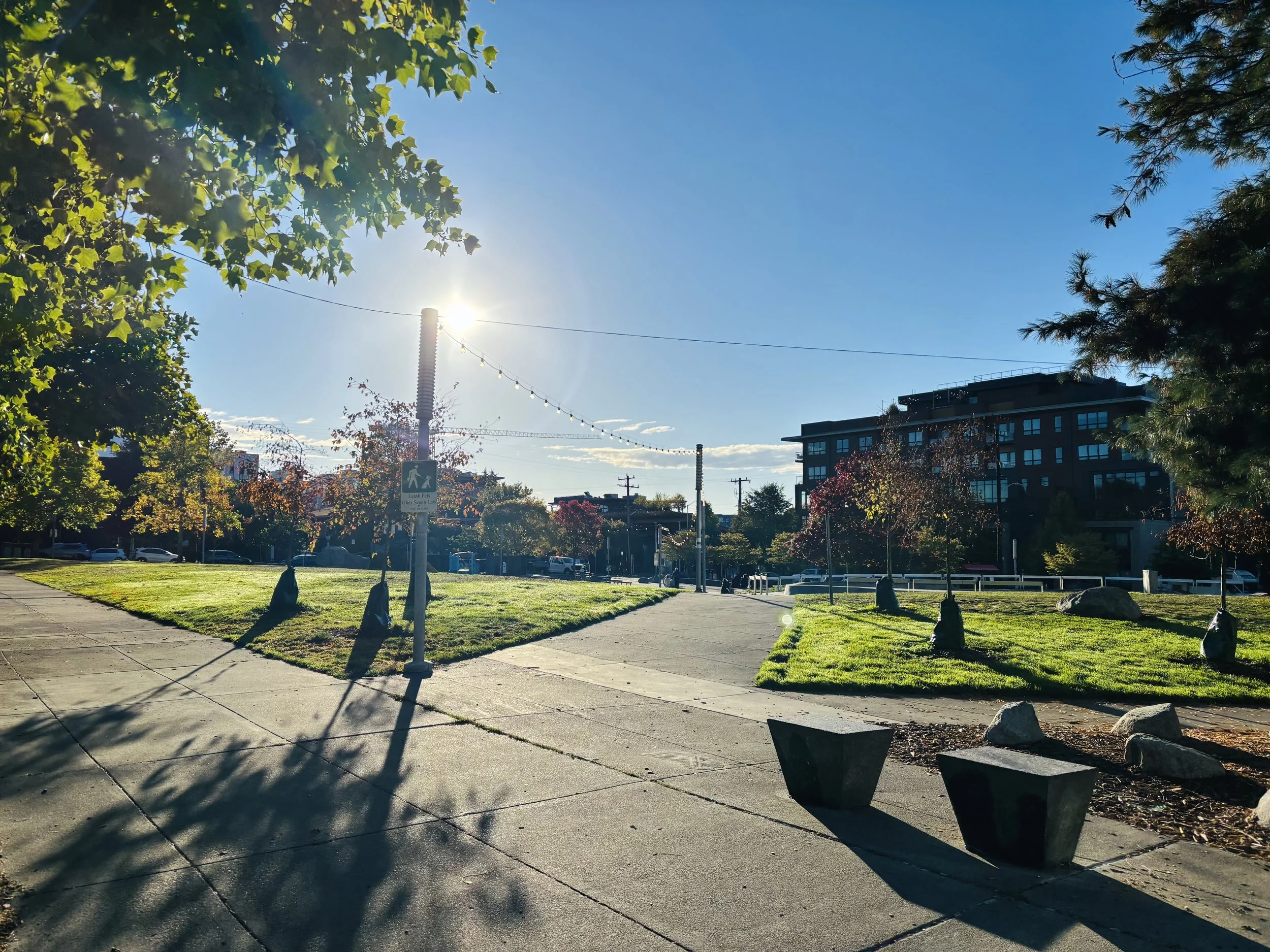
Today, the Commons is maintained, and unhoused residents can access resources across the street at St. Luke’s Church, near a subsidized apartment building.
Still, the barriers to accessing and securing housing remain high in a system that has failed to address the crisis. There is a hierarchy of homelessness, shaped by the same old prejudices. Those most in need are often destined to fail the gauntlet of eligibility requirements and bureaucratic hurdles, while those better equipped to navigate the system are more likely to find a way through.
Seattle’s streets accumulate suffering like a sponge. New “affordable” buildings rise, yet homelessness, drug use, and crime seem more visible than ever. Apartments priced beyond the reach of people living on SSI and SSA sit vacant, monuments to an affordability crisis that new construction alone cannot resolve. As Iain Sinclair observed, “New builds are hungry for narrative.”